A guide to Greek food in Athens: souvlaki, gyros, moussaka, meze, village salad and loukoumades – what to eat, taverna etiquette, and what to know if you keep kosher.
By Yana, a local in Athens · Updated October 2026
Greek food in Athens – where to begin
Greek food in Athens is half the reason to come. The cooking here is simple in the best sense: fresh produce, generous olive oil, tomatoes that actually taste of something, good cheese, wild herbs and fish. You don't need fine dining to eat brilliantly – some of your best meals will be in a small taverna down a side street, with a checked tablecloth and a wobbly table. The golden rule is to eat the way Greeks do: order plenty of plates for the middle of the table, share everything and take your time. A proper meal lasts a couple of hours, and nobody brings the bill until you ask.
Souvlaki and gyros – the city's street food
No trip to Athens is complete without souvlaki. Broadly there are two versions: small skewers of grilled meat, or a thick, soft pita wrapped around meat, tomato, onion, fries and tzatziki. Gyros is meat shaved from a rotating spit, served in a pita or on a plate. It's the city's quick, filling, budget-friendly meal – perfect at lunchtime between sights or late at night after a drink. A simple tip: wherever locals are queuing, the food is almost always good. Try the chicken version too, and ask for extra tzatziki if you like it garlicky.
Moussaka, pastitsio and home-style dishes
Greek cooking has a whole family of dishes prepared in the morning and kept warm in large trays – Greeks call them mageirefta, literally 'cooked things'. The star is moussaka: layers of aubergine, minced meat in tomato sauce and a rich béchamel crown. Alongside it you'll find pastitsio, a baked pasta dish, gemista – tomatoes and peppers stuffed with herbed rice – and slow-cooked beans or peas in olive oil. These dishes are at their best at lunchtime, freshly made, and they're the closest you'll get to real Greek home cooking without an invitation to someone's kitchen.
Meze, village salad and what else to order
The heart of a Greek meal is meze – small plates for sharing. Make sure to try tzatziki, fava (a silky yellow split-pea purée with onion and olive oil), saganaki (fried cheese), meatballs, smoky grilled aubergine, grilled octopus and calamari. And don't skip horiatiki, the village salad of tomato, cucumber, onion and olives topped with a thick slab of feta – no lettuce in sight. Ouzo or tsipouro are the classic companions, sipped slowly and always with food. A good approach: order a few meze, see how hungry you are, then add a main dish if there's still room.
Sweets and pastries – loukoumades, bougatsa and koulouri
For dessert, loukoumades are dangerously addictive: little fried dough balls soaked in honey and dusted with cinnamon or chopped nuts. In the morning try bougatsa – flaky filo pastry filled with semolina custard or cheese – or koulouri, the sesame-crusted bread ring sold on every corner. Thick Greek yoghurt with honey, spanakopita (spinach pie) and baklava are also worth tasting. To drink, order a freddo espresso or freddo cappuccino, the iced coffee Athenians drink almost all year round. Many tavernas finish the meal with a small dessert on the house, a lovely Greek gesture.
Taverna etiquette – what to know
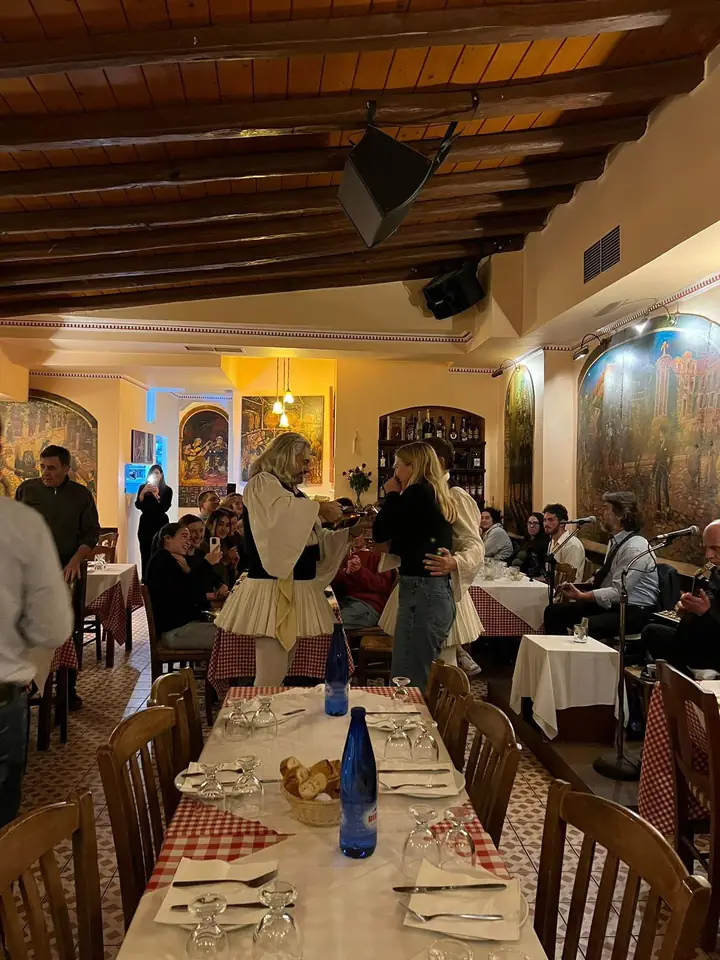
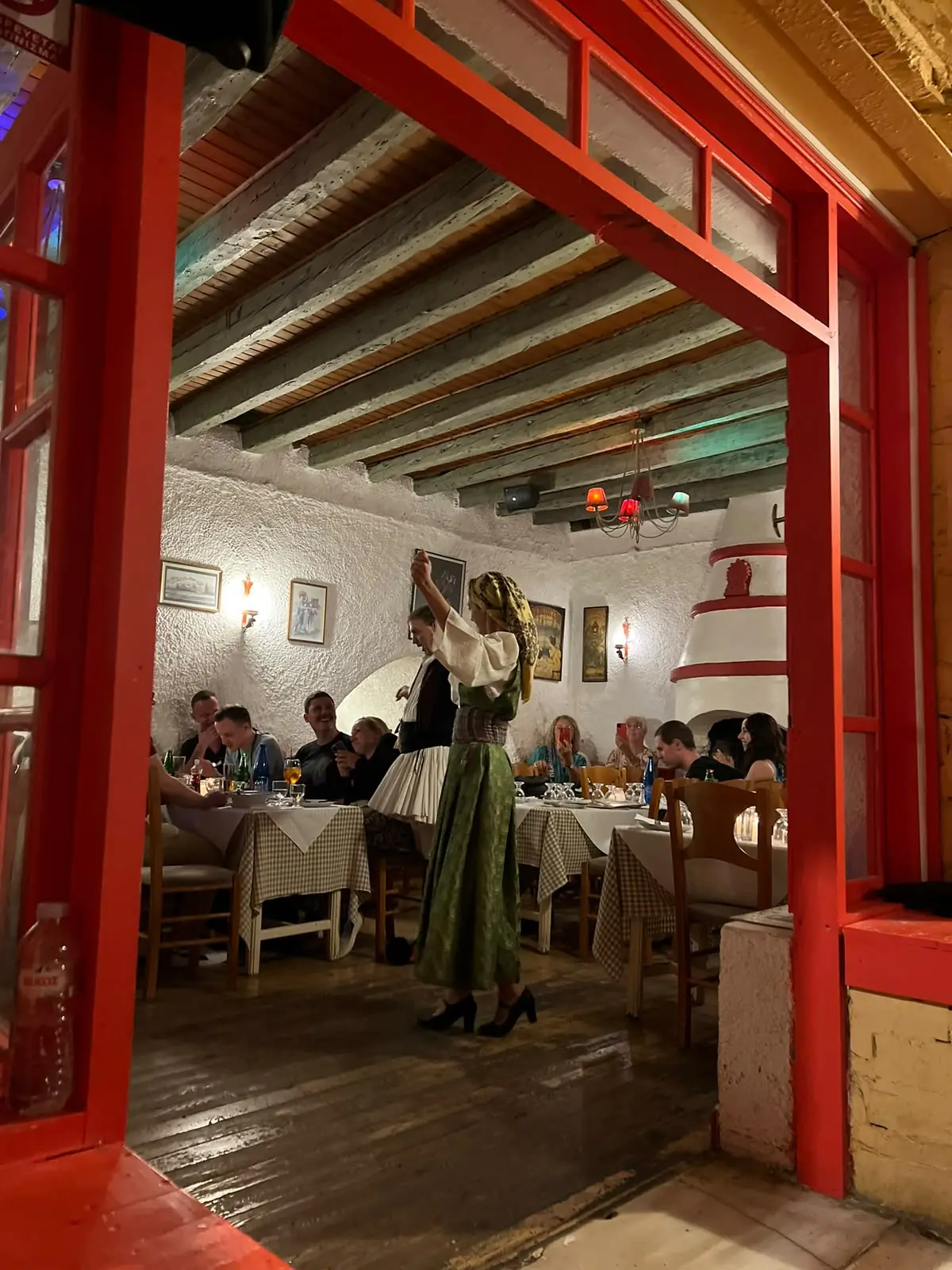
Greeks dine late, and in summer tavernas only really fill up after nine in the evening. Arrive earlier and you'll easily get a table, but the buzz comes later. Bread and water are usually placed on the table and may appear on the bill as a small cover charge – that's normal. Order for the whole table rather than individually, and ask for the bill when you're ready to leave; it won't be rushed to you. Rounding up or leaving a little cash on the table is the usual way to tip. If you'd love a taverna night with live music, dancing and plate smashing, Yana arranges exactly that.
A note for kosher travelers
It's important to know that Greek cuisine isn't kosher: meat and cheese appear together in many dishes, moussaka and pastitsio combine meat with béchamel, and seafood such as octopus and calamari is on almost every menu. Travelers who keep kosher can't rely on regular tavernas, even when a dish looks harmless. The answer is to eat at the kosher restaurant in the city centre and join the kosher evenings Yana organizes – Kabbalat Shabbat and a kosher Greek taverna night with food, music and atmosphere – so observant guests can enjoy the Greek experience with complete peace of mind.
Questions & answers
What should I eat in Athens?
Souvlaki or gyros in pita, moussaka, a village salad with feta, meze such as tzatziki and fava, and loukoumades with honey for dessert.
What time do Greeks eat dinner?
Late – most Greeks go out to eat after nine in the evening, and even later in summer.
Is taverna food in Athens kosher?
No. Kosher travelers should rely on the kosher restaurant in the city centre and on the kosher evenings Yana organizes.
Should I tip in a Greek taverna?
It isn't required, but rounding up the bill or leaving a little cash on the table is customary when service was good.