The Corinth Canal and Ancient Corinth: the bridge over the narrow cut, the Temple of Apollo, Acrocorinth and the perfect pairing with Nafplio on a day trip from Athens.
By Yana, a local in Athens · Updated October 2026
The Corinth Canal – the cut that splits Greece
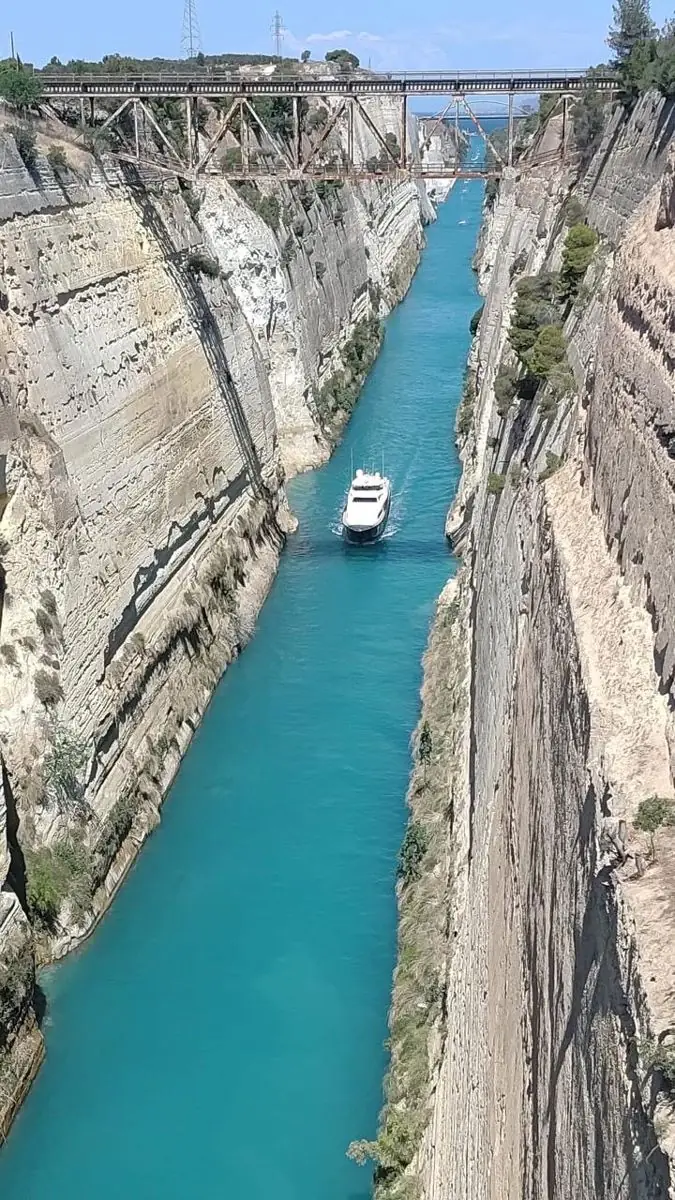
The Corinth Canal is one of the most surprising sights on the road from Athens to the Peloponnese: a narrow, dead-straight slice through solid rock, with near-vertical walls dropping dozens of metres to turquoise water. It links the Gulf of Corinth with the Saronic Gulf, cutting through the isthmus – the thin strip of land that once joined the Peloponnese to the mainland. Ancient Greeks and Romans dreamed of digging a canal here, but it only opened at the end of the 19th century. It may no longer be a major shipping route, but it's certainly one of Greece's most photogenic stops.
How to see the canal at its best
The classic stop is the footbridge above the canal near the old road. From there you look straight down to the water and along the walls, and with a bit of luck you'll see a ship or yacht gliding slowly through the cut – an unforgettable sight. At each end of the canal there are unusual bridges that sink beneath the water to let boats pass, which is worth watching too. The stop needn't be long – half an hour is enough for photos and a coffee – so it fits easily into any trip towards the Peloponnese.
Ancient Corinth
About a quarter of an hour's drive from the canal lies Ancient Corinth, once one of the richest and most powerful cities of ancient Greece and later an important Roman centre. The site's emblem is the Temple of Apollo, whose monolithic Doric columns have stood here for more than two and a half thousand years. Around it spread the remains of the Roman forum, paved streets, fountains and shops. The small on-site museum displays statues, mosaics and pottery. History lovers will especially enjoy it – there's a whole city beneath your feet.
Corinth and the Apostle Paul
Corinth holds a special place in Christian history. The Apostle Paul lived here for around a year and a half, founded a community and later wrote to it the Letters to the Corinthians in the New Testament. In the ancient forum you can still see the Bema, the speaker's platform where, according to tradition, Paul stood when brought before the Roman governor. Even if you're not visiting for religious reasons, it's a chance to see how ancient Greece, Rome and early Christianity met in one place. If the subject interests you, a little reading beforehand adds a lot.
Acrocorinth – the fortress on the mountain
Above Ancient Corinth rises Acrocorinth, a rocky mountain crowned by a vast fortress whose walls span many eras – Greek, Byzantine, Frankish, Venetian and Ottoman. A road climbs close to the first gate, and from there you continue on foot up paths and stone steps. From the top the view opens over both gulfs and the whole region – one of the finest panoramas in the Peloponnese. The climb calls for good shoes and water, and in summer it's best done early or towards evening. Even half an hour wandering between the gates is enough to be impressed.
Combine it with Nafplio – the perfect day
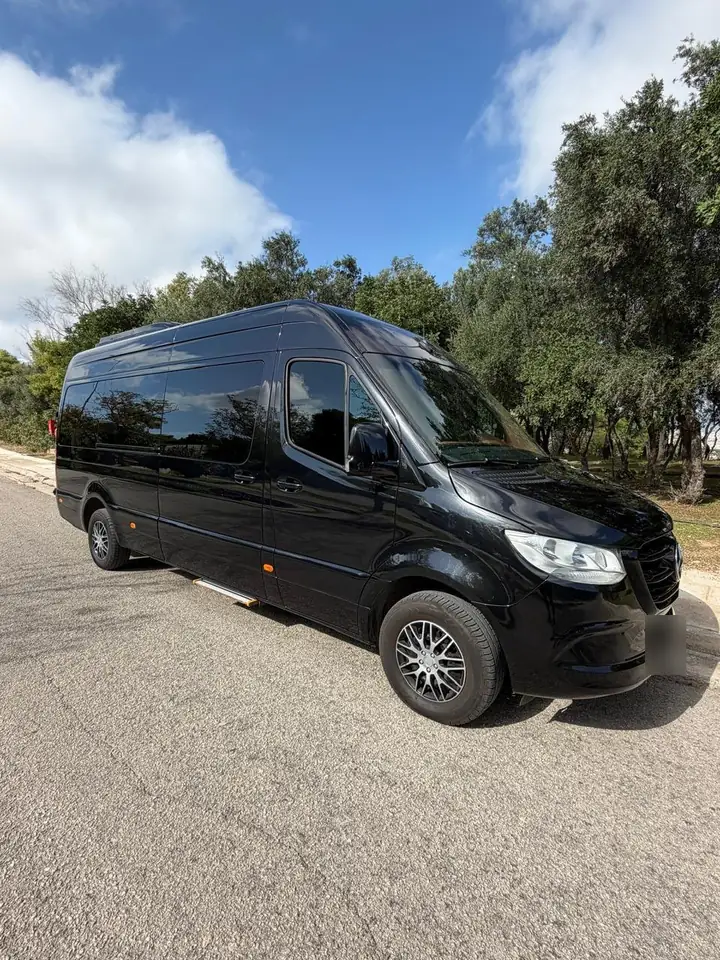
The Corinth Canal and Ancient Corinth are about an hour's drive from Athens, right on the way to Nafplio – the first capital of modern Greece and one of the country's prettiest towns. The natural combination: stop at the canal, visit the ancient site, then continue to Nafplio for its lanes, the Palamidi fortress and the Bourtzi castle in the bay. Yana arranges exactly this trip – Nafplio and the Corinth Canal – with a private English-speaking driver, so you set the pace, and you can add Mycenae or the ancient theatre of Epidaurus too.
Tips before you go
Leave Athens in the morning so you can fit in every stop without rushing. In summer the ancient site is exposed to the sun, so bring a hat, water and sunscreen, and wear comfortable shoes – both the site and Acrocorinth involve plenty of walking on stone. Opening hours vary by season, so check before you set off. Spring and autumn are the most pleasant seasons, though this trip works year-round. With a private car, you can also stop on the way back at a coastal village for a meal by the sea.
Questions & answers
How far is the Corinth Canal from Athens?
About an hour's drive, depending on traffic. It's the natural first stop on any trip to the Peloponnese.
How much time do I need for the canal and Ancient Corinth?
Half an hour for the canal and about one and a half to two hours for the ancient site and museum. Add roughly an hour for Acrocorinth.
Can I combine the canal with Nafplio in one day?
Yes – it's the classic combination. Nafplio is further along the same road, and a day with a private driver lets you enjoy both at an easy pace.
Will I see ships passing through the canal?
Sometimes. Ship and yacht crossings aren't on a fixed schedule, but if you're lucky it's one of the highlights of the visit.