Planning a visit to the Acropolis? The Parthenon, Erechtheion and Propylaea, the best time to arrive, what to wear, and how to combine it with Plaka and the museum.
By Yana, a local in Athens · Updated October 2026
Why visiting the Acropolis comes first
If there is one thing you shouldn't miss in Athens, it's visiting the Acropolis. The rocky hill rising above the city was the religious heart of ancient Athens, and in the 5th century BC, in the age of Pericles, it was crowned with the most celebrated temples in Greece. After two and a half thousand years of earthquakes, wars and restorations, standing in front of the Parthenon is still a moment that's hard to put into words. It's more than a box to tick: it's a chance to understand why this small hilltop shaped so much of Western culture – with a sweeping view over Athens to the sea as a bonus.
The Propylaea – the monumental gateway
The main way onto the Acropolis is through the Propylaea, a vast marble gateway lined with columns, built so that everyone climbing the hill would feel they were entering sacred ground. Just beside it, on a bastion to the right, stands the small and perfectly proportioned Temple of Athena Nike – one of the loveliest buildings on the site despite its size. This is also the bottleneck of the visit: at busy times the line here moves slowly, which is one more reason to arrive early. Once through the gate, the summit opens up and the Parthenon appears in full. Pause, breathe, and look back at the view before moving on.
The Parthenon and the Erechtheion
The Parthenon, dedicated to Athena, goddess of wisdom and patron of the city, is the symbol of Greece itself. Look closely at the columns: they aren't perfectly straight – the architects built in subtle curves so that the temple would look flawless to the eye. You will probably see scaffolding on part of the building, as restoration is an ongoing chapter of its story. To the north stands the Erechtheion, an unusual, asymmetrical temple famous for its Porch of the Caryatids – six sculpted maidens holding up the roof on their heads. The figures on site are copies; the originals can be seen up close in the Acropolis Museum.
When is the best time to go?
The single most useful tip: come early in the morning, right at opening, or in the late afternoon. In the middle of the day, especially in summer, the heat on the hill is intense, there's almost no shade, and the site fills with cruise groups. During extreme heatwaves the site may even close around midday. Opening hours change with the season, and entry is now usually by timed slot, so book tickets in advance through the official website and check current hours before you set out. Spring and autumn bring pleasant weather and beautiful light for photos. Allow at least an hour and a half to two hours.
What to wear and bring
The paths and steps on the Acropolis are marble and stone polished smooth over centuries, and they can be very slippery – closed shoes with good grip are essential, so leave the flip-flops and heels at the hotel. In summer bring a hat, sunglasses, sunscreen and a bottle of water; there are water fountains along the way, but it's better to be prepared. Light, comfortable clothing is fine and there's no special dress code. Large bags may not be allowed in, so carry a small one. Visitors with limited mobility can check ahead about the lift for people with disabilities that operates on the site.
Combining it with Plaka, the museum and the area
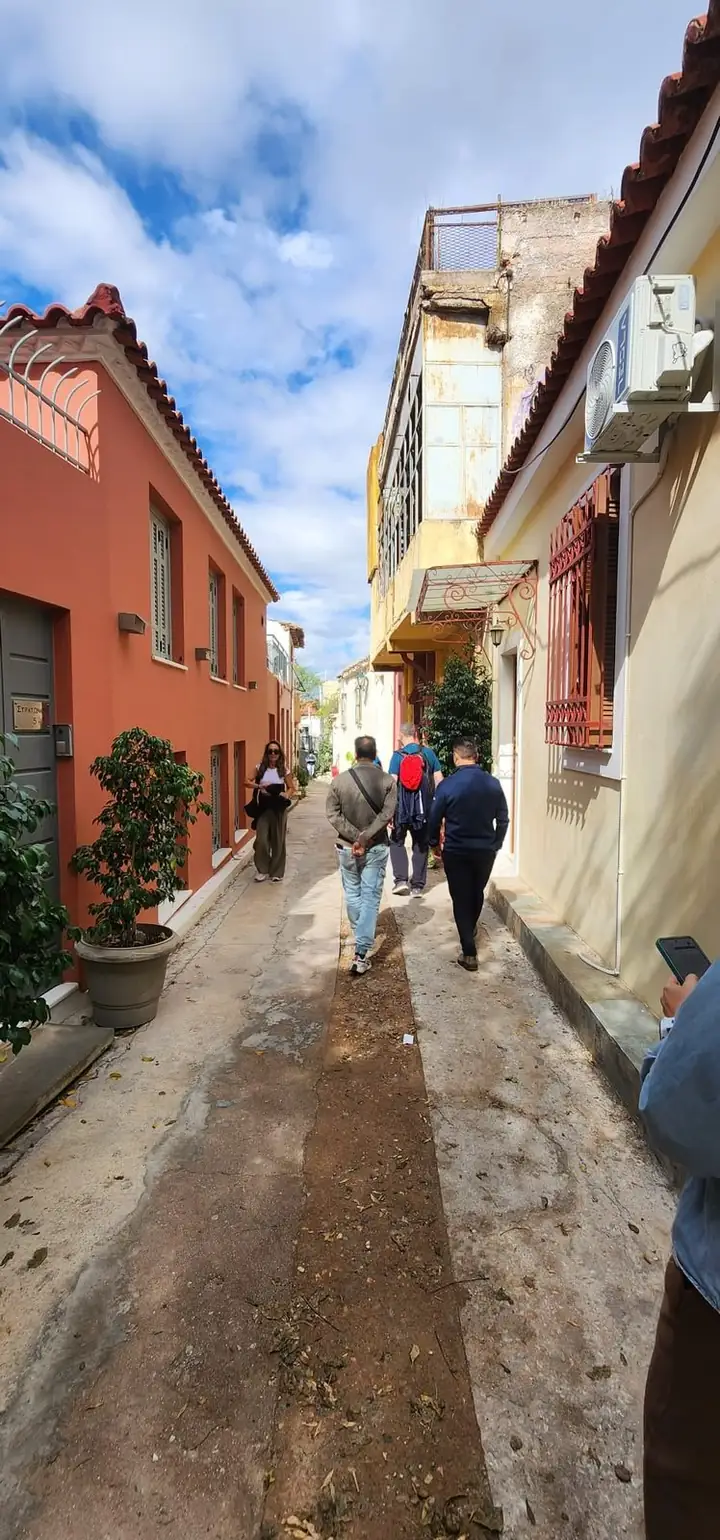
The best approach is to build a whole morning around the Acropolis: climb early, walk down to the Acropolis Museum, a short stroll from the south slope, then wander into the lanes of Plaka and Anafiotika for a proper Greek lunch. On the way, look into the Theatre of Dionysus on the south slope and climb the nearby Areopagus Hill, which offers a superb view of the Acropolis itself. If you'd like the stories behind the stones and an easy, relaxed day, Yana can help you plan the order of things so you see the most with the least rushing.
Getting there
The Acropolis sits right in the centre of Athens, and from most central hotels you can simply walk. The nearest metro station is Akropoli, next to the museum and not far from the southern entrance. From Monastiraki station you can walk up through Plaka to the main entrance. If you're travelling with small children or older parents, or coming straight from the port or the airport, Yana can arrange a private driver to drop you as close to the entrance as possible – so you save your energy for the climb itself.
Questions & answers
How long do you need at the Acropolis?
Usually an hour and a half to two hours is enough to see the site at a relaxed pace. Combined with the museum, plan for half a day.
What is the best time of day to visit the Acropolis?
Early morning at opening or late afternoon – less heat and fewer groups. Hours change by season, so check before you go.
Do I need to book Acropolis tickets in advance?
It's strongly recommended, especially in high season. Entry is usually by timed slot, and tickets are sold on the official website.
Is the Acropolis suitable for children?
Yes, but there's a climb, steps and very little shade. With kids, arrive early, bring water and hats, and keep the rest of the day light.