A guide to Plaka and Anafiotika: lanes beneath the Acropolis, island-style whitewashed houses, ancient sites along the way, the best time to wander and where to eat.
By Yana, a local in Athens · Updated October 2026
Plaka and Anafiotika – the old heart of Athens
Plaka and Anafiotika are the neighbourhoods everyone pictures when they imagine old Athens: cobbled lanes, pastel neoclassical houses, balconies spilling with bougainvillea and the Acropolis peeking over the rooftops. Plaka, spread over the northern and eastern slopes of the hill, is one of the oldest continuously inhabited neighbourhoods in Europe, and around every corner an ancient ruin appears between cafés and shops. It's the perfect place to wander without a plan, get lost on purpose and discover that this big city can also be quiet and intimate.
What to see in Plaka
The main streets, Adrianou and Kydathineon, are lined with souvenir shops, cafés and tavernas, and that's where you feel the neighbourhood's energy. But it pays to step off them: tucked between the houses are small Byzantine churches, the Choragic Monument of Lysicrates from the classical era, and the Roman Agora with the octagonal Tower of the Winds, an ancient water clock and sundial. On the edge of the district lies Hadrian's Library. The 19th-century neoclassical mansions, many beautifully restored, give Plaka its elegant character. Look up – the details on balconies and façades are lovely.
Anafiotika – a Greek island in the middle of the city
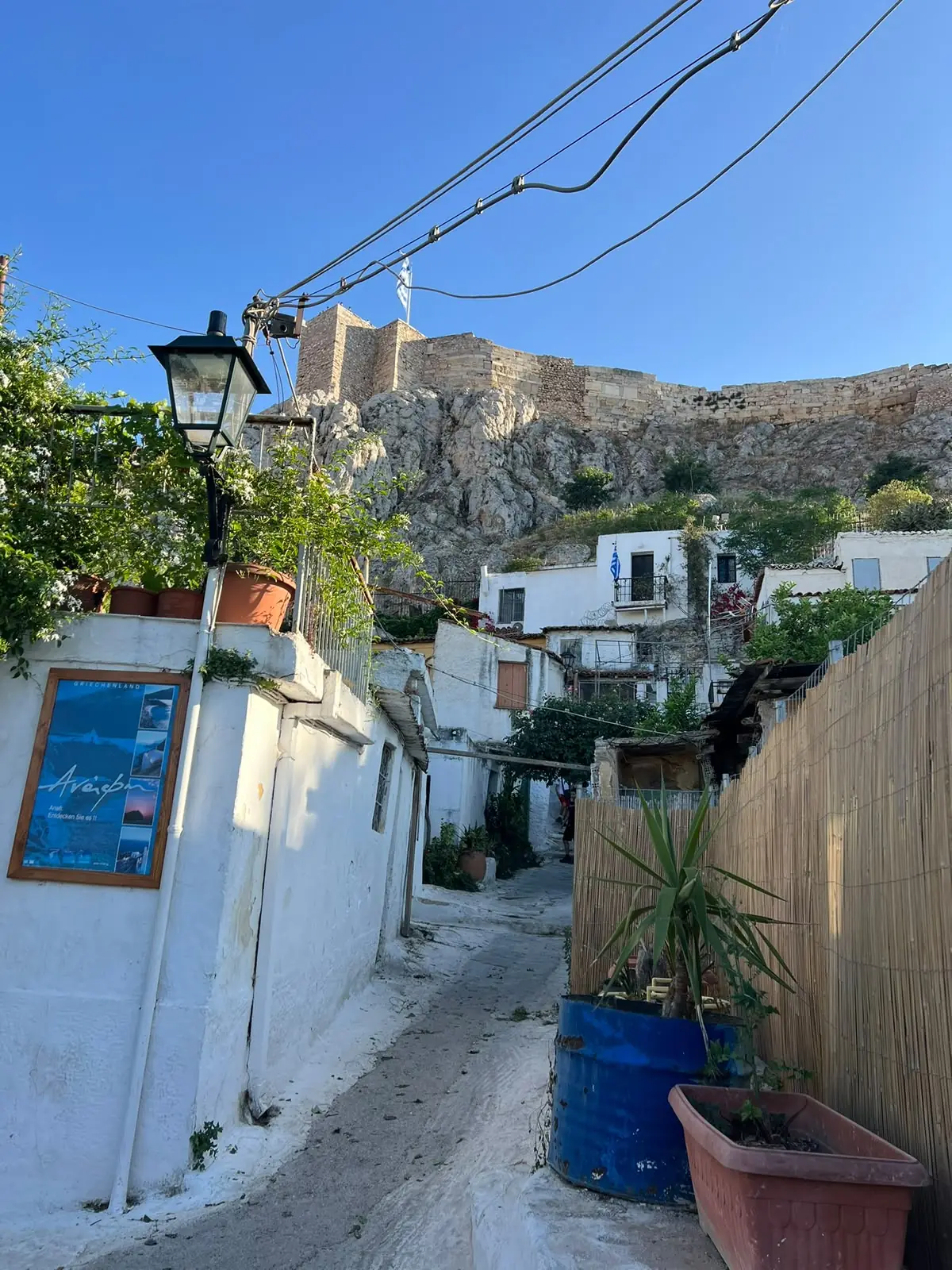
Above Plaka, right beneath the rock of the Acropolis, hides Anafiotika – a tiny cluster of whitewashed houses, narrow stairways and colourful flowerpots that looks as if it was lifted straight from the Cyclades. It was built in the 19th century by builders from the island of Anafi, who came to Athens for construction work after the founding of the modern Greek state and built homes like the ones they had left behind. It feels like a village, with cats sunbathing on the steps and a surprising hush. Remember that people live here: keep your voice down, don't enter courtyards and don't sit on doorsteps.
When to visit
The best times are the morning, before the groups arrive and the shops open, or the late afternoon, when the light turns golden and the white walls of Anafiotika glow. In the evening Plaka comes alive again – tavernas set tables out in the lanes, there's music and a real holiday mood. At midday in summer it's very hot and some lanes have little shade, so start early or plan a break in a shady café. The lanes are steep in places with plenty of steps, so comfortable shoes are a must. Pushchairs are not ideal in Anafiotika.
Eating in Plaka
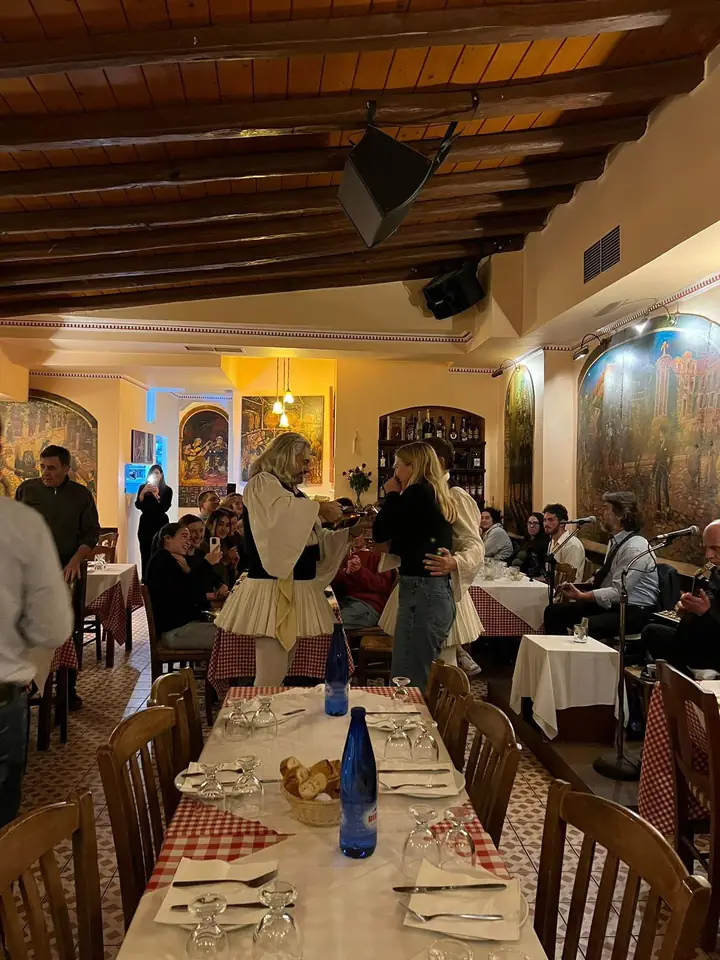
Plaka is full of restaurants, and not all of them are worth it – near the main sights some places cater mostly to one-time visitors. A good rule: move a little away from the main streets, look for places where Greeks are eating too, and order meze to share rather than one dish each. Try fresh souvlaki, a Greek salad with good feta, meatballs and local olive oil, and for dessert loukoumades – fried dough balls drenched in honey. If you'd like a whole evening of live music and Greek dancing, Yana can arrange an authentic taverna night, and there's a kosher option too.
Combining it with the Acropolis and the area
Plaka is the natural way up to the Acropolis or back down. A great route: start at Monastiraki Square, climb through Plaka to Anafiotika, follow the path that leads to the main entrance of the Acropolis, and finish the day back in the lanes for dinner. The Acropolis Museum is a short walk away, as are Syntagma Square and Ermou Street for shopping. The whole historic centre is very compact, and on most days you can skip taxis altogether and do everything on foot.
Exploring with Yana
You can wander Plaka on your own, but with someone who knows every corner it's a different experience. Yana offers a boutique walking tour of Plaka and Anafiotika, guided in Hebrew, that ties together ancient history, the neighbourhood's stories and everyday life today – including quiet corners that don't make it into guidebooks and the prettiest photo spots. For travellers who don't speak Hebrew, Yana is happy to share her personal tips for the area and help plan the rest of your stay, from taverna nights to day trips. Just send her a WhatsApp message with your dates.
Questions & answers
How long do you need for Plaka and Anafiotika?
Two to three hours for a relaxed stroll, more if you stop for a meal. Anafiotika itself is tiny and can be explored in half an hour.
How do you find Anafiotika?
Climb from Plaka through the lanes and steps toward the Acropolis rock. The neighbourhood hides right below the hill, so a map helps.
Is Plaka good for children?
Yes – the lanes are charming and it's easy to take breaks. Anafiotika has many steps, so a pushchair isn't practical there.
What is the best time to visit Plaka?
Early morning for quiet lanes, late afternoon for golden light, and evening for the taverna atmosphere.