A guide to the Ancient Agora of Athens: the superbly preserved Temple of Hephaestus, the Stoa of Attalos and its museum, and tips for timing your visit.
By Yana, a local in Athens · Updated October 2026
The Ancient Agora of Athens – the city's original heart
If the Acropolis belonged to the gods, the Ancient Agora of Athens belonged to the people. This was where classical Athenians traded, argued cases, voted, gossiped and listened to Socrates asking awkward questions. Today it is a broad, leafy archaeological site between Monastiraki and Thissio, just below the north slope of the Acropolis. Many visitors skip it, which is a mistake: it is one of the most pleasant and least crowded corners of central Athens, with shade trees, fascinating ruins and a rare view of the Acropolis from below.
Temple of Hephaestus – Greece's best-preserved temple
On a low rise at the western edge of the Agora stands the Temple of Hephaestus, god of metalworking and craftsmen. Built in the fifth century BC, around the same era as the Parthenon, it is considered one of the best-preserved Doric temples anywhere – its columns, roof and carved friezes are astonishingly intact. Its secret is that it served as a church for centuries, which protected it. Walk slowly around it, look up at the sculpted panels above the entrance and turn back for a photo of the Acropolis. In late afternoon the marble glows gold.
The Stoa of Attalos and the Agora Museum
The long two-storey colonnade on the Agora's eastern side is the Stoa of Attalos, a covered hall where merchants traded and citizens met. The original was a gift from a king of Pergamon in the second century BC; the building you see was faithfully reconstructed in the mid-twentieth century, giving you a rare sense of what a Greek public building really felt like. Inside is the Agora Museum, filled with everyday finds – pottery, coins and objects used in the workings of Athenian democracy. Its shaded portico is a perfect place to pause.
What else to see in the Agora
Beyond the two headliners, follow the Panathenaic Way, the ancient road that cuts diagonally across the Agora and climbs to the Acropolis – the route of the great procession in honour of Athena. In the southeast corner hides the Church of the Holy Apostles, a small, beautiful Byzantine church around a thousand years old, with surviving frescoes. You will also find the remains of the council house, the Odeon of Agrippa with its giant statues, and other public buildings. The signage is good, but with a guide or a good app the scattered stones turn into one story.
Practical tips for your visit
Allow at least an hour and a half to two hours, longer if you enjoy museums. Summer sun here is fierce, so come early in the morning or late in the afternoon, with a hat, water and comfortable shoes – paths are stone and gravel. There is one entrance on the Monastiraki side and another near Thissio, so you can cross the site and exit on the other side. Opening hours change by season, and combined tickets covering several sites are sometimes available, so check the official website before you go.
How to combine the Agora with the rest of your day
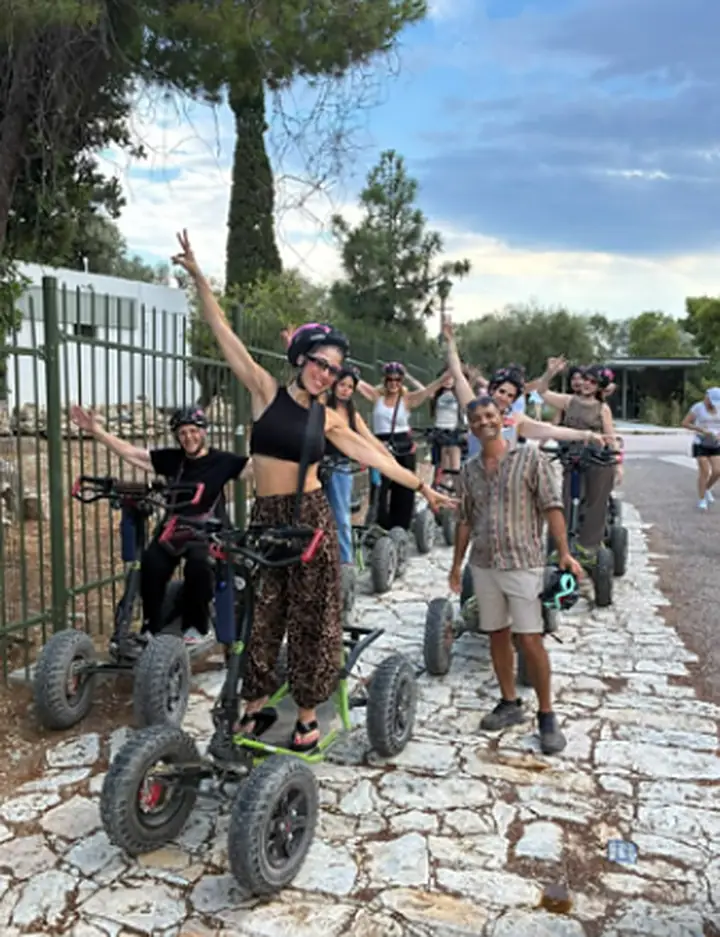
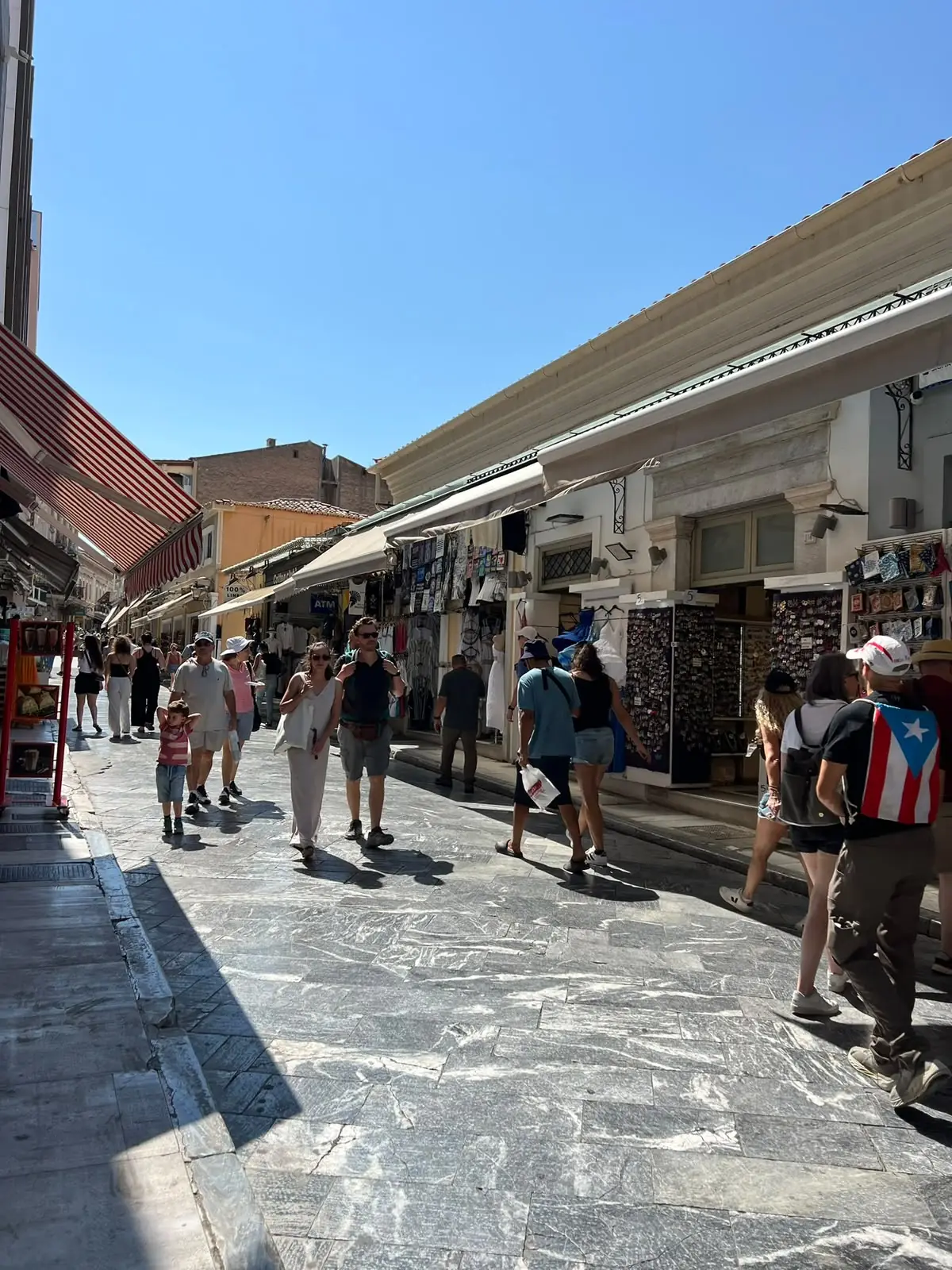
The Agora sits right between some of the most enjoyable parts of Athens. Afterwards, stroll along Adrianou Street with its cafés and Acropolis views, wander up into Plaka and Anafiotika, or drop down into the Monastiraki flea market. In the evening, neighbouring Psiri comes alive. If you would like to cover the whole area without walking for miles in the heat, Yana can arrange a motorized city tour, and she can also round off your day with a taverna night of live music and traditional dancing.
Questions & answers
How long do I need at the Ancient Agora?
Usually an hour and a half to two hours is enough to see the Temple of Hephaestus, the Stoa of Attalos and the museum. History lovers can easily spend longer.
Is the Ancient Agora close to the Acropolis?
Yes, it lies at the foot of the Acropolis's north slope, between Monastiraki and Thissio. You can walk between them, but the climb up to the Acropolis is steep, so plan the order around the heat.
When is the best time to visit the Agora?
Early morning or late afternoon, especially in summer. Late afternoon is also the most beautiful light for photographing the Temple of Hephaestus.
Is the Agora good for children?
Very. There is plenty of open space and shade, and kids usually enjoy exploring the paths and the viewpoint by the temple. Just keep an eye on uneven stones and steps.